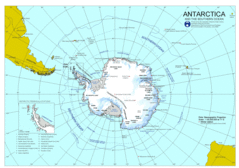
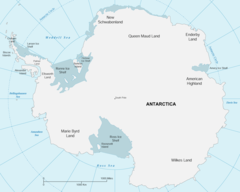
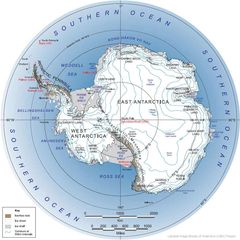
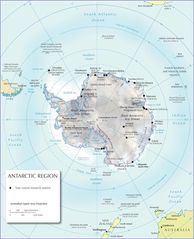
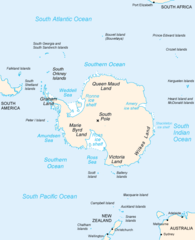
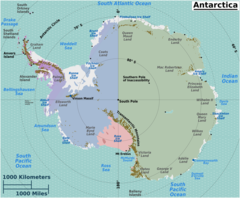
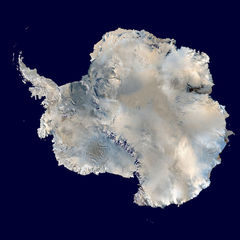
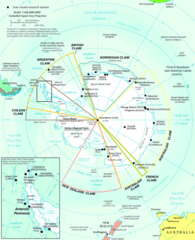
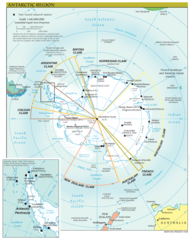
Here you will find Antarctica maps, locations list and information links. With comprehensive destination gazetteer, this page enables to explore Antarctica through detailed satellite photos — fast and easy as never before. Browse the list of cities, regions below and follow the navigation through to find populated place you are interested in. Also visit Antarctica detailed map and distance calculator Antarctica map . Your Antarctica satellite map sightseeing is here!
Click on the map and drag your mouse to move the map around. Changes also the Latitude/Longitude of the map. (Current place Latitude: -83.359, Longitude: 16.5234) Point with your mouse on a desired place on the map then double click (or click ) to center the map. Zoom in + , Zoom out – Map Type Control Buttons; to switch between various map types use this buttons: Map for street map, Satellite for satellite image; Hybrid for a combination of satellite image and street map; Terrain for a physical map view.
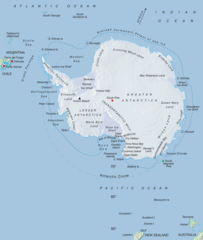
West Antarctica, or Lesser Antarctica , is one of the two major regions of Antarctica, lying on the Pacific Ocean side of the Transantarctic Mountains and comprising Marie Byrd Land, Ellsworth Land, and Antarctic Peninsula. All of West Antarctica lies within the Western Hemisphere (...) Feature: landmark, Country Code: AQ, Population: 0, Elevation: 0, Lat.: -79, Lng.: -100 read more | locate on map
East Antarctica, also called Greater Antarctica, is one of the two major regions of the Antarctic continent, lying on the Indian Ocean side of the Transantarctic Mountains and comprising Coats Land, Queen Maud Land, Enderby Land, Mac. Robertson Land, Wilkes Land and Victoria Land (...) Feature: , Country Code: AQ, Population: 0, Elevation: 0, Lat.: -80, Lng.: -80 read more | locate on map
in eastern Livingston Island, Antarctica 610 m NNE of Sinemorets Hill and 1,340 m NE of Hespérides Point. It is formed by an offshoot of Spanish Knoll. The name was given in recognition of key Spanish logistic support for the Bulgarian Antarctic campaigns. (...) Feature: , Country Code: AQ, Population: 0, Elevation: 0, Lat.: -62.6353, Lng.: -60.3569 read more | locate on map
in area, lying in the E part of the Ross Ice Shelf of Antarctica. Its central ridge rises to about 550 m above sea level. It was named by its discoverer R. Admiral Richard E. Byrd in 1934 for Franklin D. Roosevelt, then President of the United States. Roosevelt Island lies within the boundaries of Ross Dependency, which is claimed by New Zealand, whose claim is unrecognised by most other (...) Feature: isle, Country Code: AQ, Population: 0, Elevation: 0, Lat.: -79.3161, Lng.: -162.0327 read more | locate on map
:''For mountains named Mount Terror, see Mount Terror.'' Mount Terror is a large shield volcano that forms the eastern part of Ross Island. It has numerous cinder cones and domes on the flanks of the shield and is mostly under snow and ice. It is the second largest of the three volcanoes which make up Ross Island and is somewhat overshadowed by its neighbor, Mount Erebus, 30 km (20 mi) (...) Feature: mountain, Country Code: AQ, Population: 0, Elevation: 0, Lat.: -77.5167, Lng.: 168.5333 read more | locate on map
. It lies on the continent of Antarctica, on the opposite side of the Earth from the North Pole. It is the site of the US Amundsen-Scott South Pole Station, which was established in 1956 and has been permanently staffed since that date. It should not be confused with the South Magnetic Pole. (...) Feature: landmark, Country Code: AQ, Population: 0, Elevation: 0, Lat.: -90, Lng.: 0 read more | locate on map
research station located at Terra Nova Bay, Antarctica and named for Mario Zuchelli, late director of the Italian Antarctic Program. This facility is operated during the summer months (October - February) and hosts a variety of scientific projects. The ''Programma Nazionale di Ricerche in Antartide'' works closely with the US Antarctic Program and Antarctica New Zealand. (...) Feature: landmark, Country Code: AQ, Population: 0, Elevation: 0, Lat.: -74.7006, Lng.: 164.1194 read more | locate on map
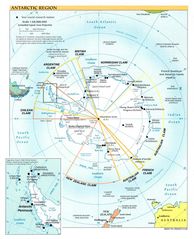
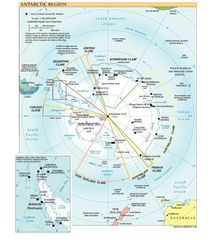
Argentine Antarctica (Spanish: ''Antártida Argentina'') is a sector of Antarctica claimed by Argentina as part of its national territory. The Argentine Antarctic region, consisting of the Antarctic Peninsula and a triangular section extending to the South Pole, is delimited by the meridians 25° West and 74° West and the parallel 60° South latitude (...) Feature: , Country Code: AQ, Population: 0, Elevation: 0, Lat.: -77.8667, Lng.: -34.6167 read more | locate on map
Sherman Island is an ice-covered island of Antarctica about 51 km (32 mi) long and 16 km (10 mi) wide, lying south of Thurston Island in the middle of Peacock Sound. The feature rises above the Abbot Ice Shelf which occupies the sound. Delineated from aerial photographs taken by US Navy Operation Highjump in December 1946 (...) Feature: , Country Code: , Population: 0, Elevation: 0, Lat.: -72.6667, Lng.: -99.75 read more | locate on map
Bear Island or Isla Teniente González is a rocky island lying 1 mile west of Stonington Island in Marguerite Bay, off the coast of Graham Land. Bear Island is located at . Bear Island was presumably known to the British Graham Land Expedition (BGLE) (1934-1937) and the United States Antarctic Service (USAS) Expedition (1939-1941), both based in the Stonington Island area (...) Feature: , Country Code: , Population: 0, Elevation: 0, Lat.: -68.18, Lng.: -67.06 read more | locate on map
:* ''Nelson Rock is the only relatively well known island with the name Nelson in Antarctica. :* ''For Nelson Island in the South Shetland Islands (which lies also relatively close to Antarctica), see Nelson Island (South Shetland Islands)'' Nelson Rock is a solitary island, being essentially a dark rock which is partly ice-covered and lies 3 miles north of Williams Rocks, off the coast (...) Feature: , Country Code: , Population: 0, Elevation: 0, Lat.: -67.3833, Lng.: 62.75 read more | locate on map
The Williams Rocks are a group of islands, being essentially rocks located 9 miles north of Flat Islands and Holme Bay, off the coast of Mac Robertson Land. The Williams Rocks are located at . The Williams Rocks were mapped by Robert G. Dovers of the Australian National Antarctic Research Expeditions (ANARE) in 1954 (...) Feature: , Country Code: , Population: 0, Elevation: 0, Lat.: -67.4333, Lng.: 62.7667 read more | locate on map
Welch Island is an island, one mile long with a prominent pinnacle rock of 130 m, lying north of Rouse Islands and one mile off the shore in the eastern side of Holme Bay. Welch Island is located at and has an elevation of 130 m. Welch Island was discovered in February 1931 by the British Australian and New Zealand Antarctic Research Expedition (BANZARE) under Sir Douglas Mawson, who (...) Feature: , Country Code: , Population: 0, Elevation: 0, Lat.: -67.5667, Lng.: 62.9333 read more | locate on map
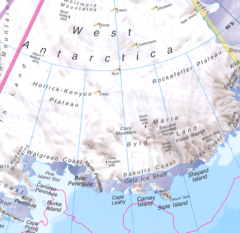
Mount Frakes is a prominent mountain marking the highest elevation in the Crary Mountains, in Marie Byrd Land, Antarctica. Mapped by the USGS from surveys and U.S. Navy air photos, 1959-66. Named by US-ACAN for Lawrence A. Frakes, USARP geologist who worked three summer seasons in the Falkland Islands and Antarctica, 1964-65 through 1967-68 (...) Feature: mountain, Country Code: AQ, Population: 0, Elevation: 0, Lat.: -76.8, Lng.: -117.7 read more | locate on map
satellite photograph of Elephant Island --> in the outer reaches of the South Shetland Islands in the Southern Ocean. It lies at latitude , 1290 km west-southwest of South Georgia, 940 km south of the Falkland Islands, and 890 km southeast of Cape Horn. (...) Feature: isle, Country Code: AQ, Population: 0, Elevation: 0, Lat.: -61.1133, Lng.: -55.1854 read more | locate on map
Paulet Island is a circular island about 1 mile in diameter, lying 3 miles southeast of Dundee Island, off the northeastern end of the Antarctic Peninsula. Paulet Island is located at . It is composed of lava flows capped by a cinder cone with a small summit crater. Geothermal heat keeps parts of the island ice-free, and the presence of such heat suggests that it was last active within (...) Feature: mountain, Country Code: AQ, Population: 0, Elevation: 0, Lat.: -63.5833, Lng.: -55.7833 read more | locate on map
Ross Island is an island formed by three volcanoes in the Ross Sea by Antarctica, off the coast of Victoria Land in McMurdo Sound at . Its area is 2,460 km². (950 sq mi.); only a small portion of the island is free of ice and snow. Sir James Clark Ross discovered it in 1841, and it was later named in honour of him by Robert F. Scott (...) Feature: isle, Country Code: AQ, Population: 0, Elevation: 0, Lat.: -77.5062, Lng.: 167.7028 read more | locate on map
Lake Fryxell is a lake 4.5 km (3 mi) long, between Canada Glacier and Commonwealth Glaciers at the lower end of Taylor Valley in Victoria Land, Antarctica. Mapped by the British Antarctic Expedition under Robert Falcon Scott, 1910-13, the lake was visited by Professor T.L. Péwé during USN Operation Deep Freeze, 1957-58, who named it for Dr. Fritiof M (...) Feature: waterbody, Country Code: AQ, Population: 0, Elevation: 0, Lat.: -77.6164, Lng.: 163.1831 read more | locate on map
Commonwealth Glacier is a glacier which flows in a southeastern direction and enters the northern side of Taylor Valley immediately west of Mount Coleman, in Victoria Land, Antarctica. Charted and named by the British Antarctic Expedition (BrAE) under Scott, 1910-13. Named for the Commonwealth of Australia, which made a financial grant to the BrAE and contributed two members to the (...) Feature: waterbody, Country Code: AQ, Population: 0, Elevation: 0, Lat.: -77.5833, Lng.: 163.3167 read more | locate on map
Alexander Island or Alexander I Island or Alexander I Land or Alexander Land or Alexander The First Island or Isla Alejandro I is the largest island of Antarctica, with an area of 43,250 km² lying in the Bellingshausen Sea west of the base of the Antarctic Peninsula, from which it is separated by Marguerite Bay and George VI Sound (...) Feature: isle, Country Code: AQ, Population: 0, Elevation: 0, Lat.: -71, Lng.: -70 read more | locate on map
subrange, as seen from Cape Hallett in the Dry Valleys of the Transantarctic Mountains. The lake is formed from glacial meltwater from the Canada Glacier and other smaller glaciers. The fresh water stays on top of the lake and freezes, sealing in briny water below. The Transantarctic Mountains (abbreviated TAM) compose a mountain range in Antarctica which extend, with some (...) Feature: , Country Code: AQ, Population: 0, Elevation: 0, Lat.: -85, Lng.: -175 read more | locate on map